MYTH #6: SUNDANCE TRIED TO CREATE BIDDING WARS TO SHAPE A FILM AESTHETIC MORE MALIABLE TO THE HOLLYWOOD INDUSTRY
What many people think of today, when they imagine Sundance in January, are rented 4-wheel drive SUVs with darkened windows doubled parked on Main street; cell phones glued to the ears of studio execs running between screenings; starlets like Paris Hilton making appearances; designer bags of expensive swag for the stars; and distributors grabbing up films in a bidding frenzy at Park City diners. First, it hasn't always been this way; Second, a vast majority of the films at Sundance never win distribution; Third, since 1994 many films never reach to the bidding wars because they are bought before the film cans are shipped to Sundance.
But the halcyon days of Sundance, when the festival gained its reputation as the mighty staging ground for battles between indie distributors for niche markets films were 1996 and later. That year a film unreeled at Sundance and set the stage for a battle that came to fist-fighting, insults, firings and big cash buys for indie film. The film was SHINE, based on a true story, it told of a talented prodigy pianist David Helfgott played by Geoffrey Rush and directed by Scott Hicks. And like the Australian indie film to leap into Oscar contention the year before, THE PIANO, all the indie distributors hoped for Oscar statues to buoy the box office.
While some might say SHINE was a "coming of age" film it really isn't. It is film about the wages of genuis on the psychie of and individual given the grant of incredible talent. Helfgott does come of age during the second act of SHINE, however, it is the story of his entire life and Rush's performance is more about living adulthood with a mental alteration of personality due to his breakdown from stress. The pressure of constraining and fully utilizing a creative talent at it highest level of artisttry leads to the collapse of Helfgott.
At Sundance, Helfgott's dramatic story is analogous to the mental breakdown of Harvey Weinstein in trying to procure the film and failing. Indie film was becoming as much a phenomenon for its production and distribution backstories as for the dramas unreeling on screen. After Tony Safford left the staff of Sundance he eventually took up employment with the Weinstein brothers in acquisitions, giving him special entree at the festival for grabbing up new films by young talent -- or so the Weinsteins hoped.
In a bidding war that Fine Line Features finally won, Safford lost out, not because he wasn't in the game or willing to offer the last and highest bid for the film that brought everyone to tears during its festival screening -- even the hard-bitten agents and talent reps. Miramax lost because Jonathan Taplin, a former Bob Dylan roadie, who had been trying to sell the film to Miramax for more than a year simply wanted to screw Harvey out of the final bid. And who could blame Taupin, engaging in negiotation with Harvey or Bob Weinsteins made the invading parasite in ALIEN seem like an invited house guest by comparsion. Producer Taupin said to director Hicks, "I don't like Miramax, I don't like their arrogance, I don't like anything about them."
This battle for a clear pure breed high-stakes race horse of a film could have all been fought out in other arena's but it all came to a head at Sundance.
But the winds and market pressures of the previous five years were all building to this point of breaking. American Indie film had reached a profitable middle market where investors could realize a profit margin, albeit smaller than high risk box office busters, and with the purchase of Miramax by Disney and Ted Turner buying Fine Line, as well as the evolution of the "classics" or art house divisions of the majors, the stakes for buying hot indie properties increased. The January film festival in the mountains of Utah became the new staging ground for these distribution bidding wars.
Harvey lost his mind in rage after loosing SHINE. The 1996 festival would come to be called the "Ten Days That Shook the Indie World" named after the Russian revolution when the Czar was put out by the Bolsheviks. Castle Rock, the indie division of Warner's paid $10 million for that years festival winner CARE OF THE SPITFIRE GRILL that also got swooped up in the buying frenzy.
After Harvey pushed and punched his way with Taupin, shouted at women reps from other distribution companies using the "B-word" toward the women and almost took Safford's head off for loosing the SHINE film, Sundance was in for yet another shift in percpetion. More than these backroom bully-boy antics that caught the attention of film festival enthusiasts around the country, the purchase price for films at Sundance has escalated with all the studio's sending art house boutique divisions and the former independents Miramax by now owned by Disney, Fine Line now owned by Turner and October by Universal, the heat was turned up underneath sales but also the expectations for box office performance shifted.
Following this incident, Harvey became determined never to loose a bidding war at Sundance again. Miramax would win these wars by buying the films before they reached the festival and the next films Miramax would grab up THE ENGLISH PATIENT and SLING BLADE were acquired before they could reach the festival circuit. The mountaineous roads through Sundance were just too rocky and Miramax would not be the only indie distributor to finally realize this fact.
When the films SHINE and SPITFIRE GRILL failed to reach break even point and payback high bid driven prices, after all the commotion at Sundance, there was little sustained interest in paying inflated dollars the intense competition created. A less spoken truth about free markets is that intense competition among giants actually leads to price inflation and rising costs rather than efficiences as utopian business school economists would have us believe.
Again in the following years, instead of setting the terms of film and story aesthetics as well as picking winners, Sundance was a victim of a vasting shifting marketplace. Just as film critics are not good predictors of popular taste, film festivals like Sundance, were no longer seen as indicators of success for films in distribution. In the future, Geoffrey Gilmore would try to advise indie filmmakers not to sell their films prior to screening them at Sundance in hopes of inflaming Park City bidding wars but that time had passed and $10 million speaks much louder than Gilmore's advice deilvered in hushed tones to inexperienced filmmakers as Billy Bob Thorton would soon to learn with his film SLING BLADE.
Sunday, May 13, 2007

Monday, May 07, 2007
MYTHS OF SUNDANCE #5
MYTH #5: THE NARRATIVE STORY OF SUNDANCE FILMS IS DRIVEN BY THE MARKETPLACE MENTALITY OF THE FESTIVAL
The year 1994 was another big turning point for Sundance as the Geoffrey Gilmore era was further taking hold at Sundance. Three films David O. Russell's SPANKING THE MONKEY, Rose Troche's GO FISH and Kevin Smiths' CLERKS came forward as the emerging films in the newly market-like atmosphere of Sundance.
Sure, in years past there had been success with Sundance films SEX. LIES, AND VIDEOTAPE and RESERVOIR DOGS, however, neither film was picked up at Sundance and nobody had seen anything like the bidding wars that would come to typify the cinema lobbies, streets and cafe's of Park City in the mid and late 90s. Prior to 1994, filmmakers came to Utah out of a love for their film and a chance to screen it but never in hopes of striking it rich, hitting the lottery or even acquiring theatrical distribution.
Rose Troche's GO FISH and Kevin Smiths' CLERKS were small budget limited location talkie pics with a gritty urban sensibility that both seemed inspired by the storyless atmospheric films of Jim Jarmsuch and Richard Linklater. Yet, their tone, trajectory, and cultural perspective of each were vastly different. Smith recalls watching Linklater's SLACKERS in New York city and thinking, this guy is from Austin, Texas and I am watching his film and "I can do that" however, Smith's aimless and directless existential CLERKS is about New Jersey. SPANKING THE MONKEY is a mother-son incest film that few would claim was wrritten and made to inspire a distributors feeding-frenzy.
CLERKS had been screened at IFP's IFFM in New York the fall before and no one took interest but in the newly rarified and competitive atmosphere of Gilmore's Sundance Smith film caught the attention, almost to Pierson's surprise, of Harvey Weinstein who with fistfuls of Disney cash was buying up films at an all-you-can-eat-buffet eaters pace.
Christine Vachon and Tom Kalin teamed to bring the lesbian love story, that when reduced down, is about whether an attractive urbane lesbian is lonely enough to accept a frumpy, homely, and older lesbian as her girlfriend. Both Smith's CLERKS and Troche's GO FISH were being rep'd by John Pierson who tauntingly provoked indie distributors to buy the minimalist narratives. As Pierson, Weinstein, and Smith crossed the street to sit down and deal for CLERKS, Pierson shouted out to the reps from the other indies waiting outside the cinema, "This is your last chance" amkinf sure they knew Harvey was going to be soon sitting at their table.
Other indie distributors were also caught by surprise and worried that all the most viable product was being swept onto Harvey's newly enlarged plate. They too were jumping at films that might have been easily passed over a few years ago for the plotting and dismal lack of dramatic arch. But again, the market forces that made indie distributors like October, Miramax, Fine Line, and Goldwyn buy up small indies for a few hundred thousand and see only a few million in profit needed a place to call home and Sundance provided that farm league atmosphere and the competitive bidding began.
Pierson was able to tap this competition among suitors that year to also land a deal with Goldwyn for the distribution of GO FISH. Was there a new wave of Ameircan Indie filmmakers creating and entirely new marketplace? Was Sundance providing a staging place for indies to launch their previously unseen and unknown films that would have ended up in a box in their basements never to see the bulb in a movie theater? Was Sundance forcing indie filmmakers to make film tailored for sales at the sake of an independent and experiemntal vision?
If any aesthetic these films shared it was one of making a feature film on extremely limited budgets. CLERKS was filmed and edited for $27,000 on location in Smith's place of employment. After experiencing extraordinary success at Sundance and later joining the Miramax entourage at Cannes where Tarantino's PULP FICTION took home the Palm d'Or, Smith returned to his clerking job in New Jersey at the same convenience store where he shot the film CLERKS. To say the films and their stories were driven by the marketplace bidding wars at Sundance is to put the cart before the horse.
The year 1994 was another big turning point for Sundance as the Geoffrey Gilmore era was further taking hold at Sundance. Three films David O. Russell's SPANKING THE MONKEY, Rose Troche's GO FISH and Kevin Smiths' CLERKS came forward as the emerging films in the newly market-like atmosphere of Sundance.
Sure, in years past there had been success with Sundance films SEX. LIES, AND VIDEOTAPE and RESERVOIR DOGS, however, neither film was picked up at Sundance and nobody had seen anything like the bidding wars that would come to typify the cinema lobbies, streets and cafe's of Park City in the mid and late 90s. Prior to 1994, filmmakers came to Utah out of a love for their film and a chance to screen it but never in hopes of striking it rich, hitting the lottery or even acquiring theatrical distribution.
Rose Troche's GO FISH and Kevin Smiths' CLERKS were small budget limited location talkie pics with a gritty urban sensibility that both seemed inspired by the storyless atmospheric films of Jim Jarmsuch and Richard Linklater. Yet, their tone, trajectory, and cultural perspective of each were vastly different. Smith recalls watching Linklater's SLACKERS in New York city and thinking, this guy is from Austin, Texas and I am watching his film and "I can do that" however, Smith's aimless and directless existential CLERKS is about New Jersey. SPANKING THE MONKEY is a mother-son incest film that few would claim was wrritten and made to inspire a distributors feeding-frenzy.
CLERKS had been screened at IFP's IFFM in New York the fall before and no one took interest but in the newly rarified and competitive atmosphere of Gilmore's Sundance Smith film caught the attention, almost to Pierson's surprise, of Harvey Weinstein who with fistfuls of Disney cash was buying up films at an all-you-can-eat-buffet eaters pace.
Christine Vachon and Tom Kalin teamed to bring the lesbian love story, that when reduced down, is about whether an attractive urbane lesbian is lonely enough to accept a frumpy, homely, and older lesbian as her girlfriend. Both Smith's CLERKS and Troche's GO FISH were being rep'd by John Pierson who tauntingly provoked indie distributors to buy the minimalist narratives. As Pierson, Weinstein, and Smith crossed the street to sit down and deal for CLERKS, Pierson shouted out to the reps from the other indies waiting outside the cinema, "This is your last chance" amkinf sure they knew Harvey was going to be soon sitting at their table.
Other indie distributors were also caught by surprise and worried that all the most viable product was being swept onto Harvey's newly enlarged plate. They too were jumping at films that might have been easily passed over a few years ago for the plotting and dismal lack of dramatic arch. But again, the market forces that made indie distributors like October, Miramax, Fine Line, and Goldwyn buy up small indies for a few hundred thousand and see only a few million in profit needed a place to call home and Sundance provided that farm league atmosphere and the competitive bidding began.
Pierson was able to tap this competition among suitors that year to also land a deal with Goldwyn for the distribution of GO FISH. Was there a new wave of Ameircan Indie filmmakers creating and entirely new marketplace? Was Sundance providing a staging place for indies to launch their previously unseen and unknown films that would have ended up in a box in their basements never to see the bulb in a movie theater? Was Sundance forcing indie filmmakers to make film tailored for sales at the sake of an independent and experiemntal vision?
If any aesthetic these films shared it was one of making a feature film on extremely limited budgets. CLERKS was filmed and edited for $27,000 on location in Smith's place of employment. After experiencing extraordinary success at Sundance and later joining the Miramax entourage at Cannes where Tarantino's PULP FICTION took home the Palm d'Or, Smith returned to his clerking job in New Jersey at the same convenience store where he shot the film CLERKS. To say the films and their stories were driven by the marketplace bidding wars at Sundance is to put the cart before the horse.
Thursday, May 03, 2007
MYTHS OF SUNDANCE #4
MYTH #4: SUNDANCE IS PREDICTABLE AND THE JURY FOLLOWS LAST YEARS TREND
And just when it seemed Sundance had turned the corner and begun embracing radical new ideas from the New Queer Cinema movement, another even less politically progressive statement emerged -- Quentin Tarantino, RESERVOIR DOGS and the pulp fiction aesthetic.
Quentin Tarantino is a brilliantly geeky throwback to a bygone era of violently gratuitous film and literature for which his masterful breakout film PULP FICTION is named. First and foremost, like his predecessors in pulp or detective fiction of the serie noire and weird menace schools, Tarantino is an inspired writer with defiant flair and tongue firmly in cheek.
Tarantino was born of an entirely new generation of VHS film enthusiasts who never went to film school (in fact, he never graduated from high school) and after simply and obsessively working at Video Archives in Manhattan Beach, California. Tarantino and his friend Roger Avery (co-writer of PULP FICTION) watched, wrote and dreamed of making their own films. The video rental geeks fashioned their own graduate program in film by watching movies day-in and day-out. While Sundance was founded by a generation of film enthusiasts who were starved by the lack of access to film viewing (other than in revival cinema houses) the VHS generation grew up with the TV and VCR as their babysitters.
With Tarantino, violent films should be violent for violence sake. He never had time for the pretense of art house films. In fact, at a screening of RESERVOIR DOGS in Park City, when asked about the offensive nature of violence in his films, as if to spit in their face, Tarantino answered, he was offended by the pretentious beauty of Merchant and Ivory films. Afterall, despite the wealth of plenty, titles the video stores were primarily stocked with action and adventure, horror, kung-fu, and b-movies of the sensationalist vein. For Tarantion and Avery there were no classics of early cinema other than shoot-em ups, blood-and-horror, super-natural fight films, high-impact FX, and action and adventure and these movies shaped their world view.
In many ways, if Sundance embodied the indie spirit, it did so by bashing and breaking down paradigms. The b-side mentality that populated the most conservative state of Utah in January was always ready to confront, accuse, and shock you out of what you came to expect from Sundance itself. Tarantino brought back to Sundance the indie spirit embodied in Roger Corman from the early 1960s -- a visceral shock of the weird, sensational and objectly violent. Tarantino's aspirations for film were school-boyish, as he once told Allison Anders on a date he wanted to write a book about how to go to film festivals to get laid.
If you came to Sundance expecting crunchy granola films it gave you New Queer Cinema instead. If you came expecting Native American films it gave you the geeky LA white boy spouting the "n-word" in his scripts without any remorse or regret. If you expected the films to be safe uplifting toiling in the soil stories from the heartland it gave you POISON or sex, lies, and videotape instead.
For better or worse, American Indie film consists of rule breakers, outlaws, misfits and non-conformists to the movie industry standard. The twist Tarantino brought was of careless irony, his films were parodies of themselves and yet very much nothing more serious than the films they parodied.
In the year Tarantino brought RESERVOIR DOGS to Sundance, Alison Anders screened GAS, FOOD AND LODGING and Alexander Rockwell's IN THE SOUP also contended but Rockwell's SOUP about a down and out indie filmmaker played by Steve Buscemi unexpectedly took the top prize. Their films could not have been more different from each other in scope, if they'd met and planned them in advance.
In street cred terms, as an emerging filmmakers festival Sundance always had to deliver something each year that defied the logic of a trend. The festival was in a continual process of trying to reinvent itself and was able to do so because between the period of the mid to late 80s to the earl 90s the number of indie filmmakers sending their films to Sundance for consideration dramatically increased from a few hundred to thousands.
If anything is predictable about Sundance is the defiant spirit of the filmmakers who are outsiders to an insiders industry and want to make a statement.
And just when it seemed Sundance had turned the corner and begun embracing radical new ideas from the New Queer Cinema movement, another even less politically progressive statement emerged -- Quentin Tarantino, RESERVOIR DOGS and the pulp fiction aesthetic.
Quentin Tarantino is a brilliantly geeky throwback to a bygone era of violently gratuitous film and literature for which his masterful breakout film PULP FICTION is named. First and foremost, like his predecessors in pulp or detective fiction of the serie noire and weird menace schools, Tarantino is an inspired writer with defiant flair and tongue firmly in cheek.
Tarantino was born of an entirely new generation of VHS film enthusiasts who never went to film school (in fact, he never graduated from high school) and after simply and obsessively working at Video Archives in Manhattan Beach, California. Tarantino and his friend Roger Avery (co-writer of PULP FICTION) watched, wrote and dreamed of making their own films. The video rental geeks fashioned their own graduate program in film by watching movies day-in and day-out. While Sundance was founded by a generation of film enthusiasts who were starved by the lack of access to film viewing (other than in revival cinema houses) the VHS generation grew up with the TV and VCR as their babysitters.
With Tarantino, violent films should be violent for violence sake. He never had time for the pretense of art house films. In fact, at a screening of RESERVOIR DOGS in Park City, when asked about the offensive nature of violence in his films, as if to spit in their face, Tarantino answered, he was offended by the pretentious beauty of Merchant and Ivory films. Afterall, despite the wealth of plenty, titles the video stores were primarily stocked with action and adventure, horror, kung-fu, and b-movies of the sensationalist vein. For Tarantion and Avery there were no classics of early cinema other than shoot-em ups, blood-and-horror, super-natural fight films, high-impact FX, and action and adventure and these movies shaped their world view.
In many ways, if Sundance embodied the indie spirit, it did so by bashing and breaking down paradigms. The b-side mentality that populated the most conservative state of Utah in January was always ready to confront, accuse, and shock you out of what you came to expect from Sundance itself. Tarantino brought back to Sundance the indie spirit embodied in Roger Corman from the early 1960s -- a visceral shock of the weird, sensational and objectly violent. Tarantino's aspirations for film were school-boyish, as he once told Allison Anders on a date he wanted to write a book about how to go to film festivals to get laid.
If you came to Sundance expecting crunchy granola films it gave you New Queer Cinema instead. If you came expecting Native American films it gave you the geeky LA white boy spouting the "n-word" in his scripts without any remorse or regret. If you expected the films to be safe uplifting toiling in the soil stories from the heartland it gave you POISON or sex, lies, and videotape instead.
For better or worse, American Indie film consists of rule breakers, outlaws, misfits and non-conformists to the movie industry standard. The twist Tarantino brought was of careless irony, his films were parodies of themselves and yet very much nothing more serious than the films they parodied.
In the year Tarantino brought RESERVOIR DOGS to Sundance, Alison Anders screened GAS, FOOD AND LODGING and Alexander Rockwell's IN THE SOUP also contended but Rockwell's SOUP about a down and out indie filmmaker played by Steve Buscemi unexpectedly took the top prize. Their films could not have been more different from each other in scope, if they'd met and planned them in advance.
In street cred terms, as an emerging filmmakers festival Sundance always had to deliver something each year that defied the logic of a trend. The festival was in a continual process of trying to reinvent itself and was able to do so because between the period of the mid to late 80s to the earl 90s the number of indie filmmakers sending their films to Sundance for consideration dramatically increased from a few hundred to thousands.
If anything is predictable about Sundance is the defiant spirit of the filmmakers who are outsiders to an insiders industry and want to make a statement.
MYTHS OF SUNDANCE #3
In all my discussions about the American indie film festivals, people often like to throw out plithy statements that fail to appreciate the conplex history and evolution of the festival. And common recant among critics goes like this:
MYTH #3: SUNDANCE ALWAYS PLAYS IT SAFE
If anything Redford deserves a lot of credit for sticking with Sundance despite it's inability to serve his interests and follow the course he'd set for it aesthetically and politically. Often what conspiratorialists and simplistic paranoids fail to appreciate about the success of a cultural phenomenon that reaches critical mass is that as an organism its vitlaity often transcends individuals, supersedes best laid plans and takes on a life of its own far, far beyond the founding visions or masterminds behind them.
In order to maintain a pure conspiracy, there must be a vigorous denial of the truth and the truth behind Sundance is that it never had a cohesive plan that gelled into a controlled form of power. Redford could favor a film or a filmmaker, a script or a project but that never assured it of success either in the arena of Sundance itself or in the outside world of distribution, box office or financial success. Likewise, a filmmaker who saw success emerge from Sundance, Soderbergh for instance, could not easily return favor to Redford or any other minion or passionate loyalist in the Sundance family. As it should be in the world of dynamic and changing artistic expression, it's never that easy.
Before 1992 Sundance tried to promote a culture where artists could be protected from the mean and brutal world of business suits, lawyers, powerbrokers, shady dealers, and blood sucking bottom feeders. However, due to their open door practices and the onslaught of success the festival only served to attract these types more. What people fail to realize, is that the studio system in Hollywood, that everybody rebelled against for their creative survival, was originally established as a West Coast sanctuary for creative artists or, at least, the idea of it in the minds of Louis B. Mayer, Irving Thalberg, Marcus Loew, William Fox, and Samuel Goldwyn, and all the studio bosses that proceded them. But power corrupts and absolute power corrupts absolutely.
The years 1991 and 92 were big turning points for Sundance when its reputation shifted from the crunchy granola soft 70s-styled PCness that was in its founders hearts to what some would term the cell phone era. Did Sundance promote and conspire to create a "cell phone" culture ? -- No, the cell phone transformed Sundance at a time when it was at its weakest.
While in the midst of staff shake out and hugely changing times Sundance did NOT play it safe. In 1991 the New Queer Cinema movement arrived at Sundance with a young semotics deconstructionist from Brown named Todd Haynes and his producer Christine Vachon. This producer/director duo brought to the festival in Utah a film that was anything but safe called POISON. Haynes previous movie SUPERSTAR: THE KAREN CARPENTER STORY had raised a considerable controversy, first with its funders in the Lynn Cheney NEA era, and then with Mattel the makers of Barbie doll. Haynes Karen Carpenter film has been banned in the U.S. but has become available on the internet. Haynes, with an artist grant support from the Jerome Foundation, and Vachon led a troop of new gay filmmakers with an activist agenda.
Greg Araki THE LIVING END, Tom Kalin, Christopher Munch's THE HOURS AND TIMES and the doc PARIS IS BURNING are all militant gay films that made the Lands End, dockers, and mountain boot Sundance establishment uneasy. Sure, Sundanistias could happily have their heart-strings pulled with films like PARTING GLANCES and enjoy the antics of a film like THE BIRDCAGE but POISON drove them from the theater in fear.
In one scene from POISON, men spit in each other's mouths, a horrifying evocation in the post-HIV trauma era of the early 1990s. More than just a shocking depiction of rape and violence (topics not commonly appearing on the Sundance screen in the early years), Haynes film intercuts three stories of completely different genre, one staged as a documentary to challenge the very conventions of film itself. While most film institutions and certainly the funders were narrowing their aesthetic to narrative "golden mean" storytelling, Haynes was producing avante-garde cinema one could only rarely see on folding chairs in dank warehouses below Canal street or in European cinematheques.
Haynes was experimental and an exception to the simple narrative trend in American indie film. While the expectations at Sundance that year were that Hal Hartnley's TRUST or Julie Dash's DAUGHTERS OF THE DUST might take home the Grand Jury Prize from Sundance, the surprise was Hayne's shocking deconstructionist film POISON came away the winner and Vachon's thumbprint would stamp many Sudance seasons to come.
The Sundance of 1991 could not be termed safe and it radically shook the foundation and shifted the direction of the festival for the future.
MYTH #3: SUNDANCE ALWAYS PLAYS IT SAFE
If anything Redford deserves a lot of credit for sticking with Sundance despite it's inability to serve his interests and follow the course he'd set for it aesthetically and politically. Often what conspiratorialists and simplistic paranoids fail to appreciate about the success of a cultural phenomenon that reaches critical mass is that as an organism its vitlaity often transcends individuals, supersedes best laid plans and takes on a life of its own far, far beyond the founding visions or masterminds behind them.
In order to maintain a pure conspiracy, there must be a vigorous denial of the truth and the truth behind Sundance is that it never had a cohesive plan that gelled into a controlled form of power. Redford could favor a film or a filmmaker, a script or a project but that never assured it of success either in the arena of Sundance itself or in the outside world of distribution, box office or financial success. Likewise, a filmmaker who saw success emerge from Sundance, Soderbergh for instance, could not easily return favor to Redford or any other minion or passionate loyalist in the Sundance family. As it should be in the world of dynamic and changing artistic expression, it's never that easy.
Before 1992 Sundance tried to promote a culture where artists could be protected from the mean and brutal world of business suits, lawyers, powerbrokers, shady dealers, and blood sucking bottom feeders. However, due to their open door practices and the onslaught of success the festival only served to attract these types more. What people fail to realize, is that the studio system in Hollywood, that everybody rebelled against for their creative survival, was originally established as a West Coast sanctuary for creative artists or, at least, the idea of it in the minds of Louis B. Mayer, Irving Thalberg, Marcus Loew, William Fox, and Samuel Goldwyn, and all the studio bosses that proceded them. But power corrupts and absolute power corrupts absolutely.
The years 1991 and 92 were big turning points for Sundance when its reputation shifted from the crunchy granola soft 70s-styled PCness that was in its founders hearts to what some would term the cell phone era. Did Sundance promote and conspire to create a "cell phone" culture ? -- No, the cell phone transformed Sundance at a time when it was at its weakest.
While in the midst of staff shake out and hugely changing times Sundance did NOT play it safe. In 1991 the New Queer Cinema movement arrived at Sundance with a young semotics deconstructionist from Brown named Todd Haynes and his producer Christine Vachon. This producer/director duo brought to the festival in Utah a film that was anything but safe called POISON. Haynes previous movie SUPERSTAR: THE KAREN CARPENTER STORY had raised a considerable controversy, first with its funders in the Lynn Cheney NEA era, and then with Mattel the makers of Barbie doll. Haynes Karen Carpenter film has been banned in the U.S. but has become available on the internet. Haynes, with an artist grant support from the Jerome Foundation, and Vachon led a troop of new gay filmmakers with an activist agenda.
Greg Araki THE LIVING END, Tom Kalin, Christopher Munch's THE HOURS AND TIMES and the doc PARIS IS BURNING are all militant gay films that made the Lands End, dockers, and mountain boot Sundance establishment uneasy. Sure, Sundanistias could happily have their heart-strings pulled with films like PARTING GLANCES and enjoy the antics of a film like THE BIRDCAGE but POISON drove them from the theater in fear.
In one scene from POISON, men spit in each other's mouths, a horrifying evocation in the post-HIV trauma era of the early 1990s. More than just a shocking depiction of rape and violence (topics not commonly appearing on the Sundance screen in the early years), Haynes film intercuts three stories of completely different genre, one staged as a documentary to challenge the very conventions of film itself. While most film institutions and certainly the funders were narrowing their aesthetic to narrative "golden mean" storytelling, Haynes was producing avante-garde cinema one could only rarely see on folding chairs in dank warehouses below Canal street or in European cinematheques.
Haynes was experimental and an exception to the simple narrative trend in American indie film. While the expectations at Sundance that year were that Hal Hartnley's TRUST or Julie Dash's DAUGHTERS OF THE DUST might take home the Grand Jury Prize from Sundance, the surprise was Hayne's shocking deconstructionist film POISON came away the winner and Vachon's thumbprint would stamp many Sudance seasons to come.
The Sundance of 1991 could not be termed safe and it radically shook the foundation and shifted the direction of the festival for the future.
Sunday, April 29, 2007
MYTHS OF SUNDANCE #2
In the early 90s, just after the phenomenal success of SEX, LIES AND VIDEOTAPE, the administration of Sundance crumbled and many associated with the actor financed enterprise. Tony Safford left, there was much displeasure with the non-profit festival and institute and the for-profit resort and their symbiotic relationship. But more than anything else, people were asking what is the purpose of Sundance and why was Redford still funding it?
MYTH #2: SUNDANCE WILL ALWAYS SERVE REDFORD'S PERSONAL AND PROFESSIONAL INTERESTS AND NOT THE INDIE INDUSTRY OR FILMMAKER.
After almost sweeping the awards competition at Cannes, Steven Soderbergh returned to L.A. in hot demand. He agreed to be a poster boy for Sundance and let the festival take credit for being the world-wide launch pad for "sex, lies and videotape." For reasons of ego and money, not all filmmakers want to concede anything or give away credits to profit and especially non-profit development institutions whether they helped them or not. But Soderbergh, although he might come regret it later, was more giving than the average indie filmmaker toward Sundance and Redford.
And Robert Redford was actively courting Soderbergh for a film he wanted to make with Soderbergh called KING OF THE HILL. Even before Miramax released "sex lies and videotape" to sensational box office, Sodebergh was making arrangements to make his next films. He was happy to be talking with Redford, even hoped the generous A-list actor would become a mentor to his future career. But the young southerner was also talking with Pollack about making the biopic KAFKA and time frames are critical in packaging movies regardless if you are an rogue indie, a wannabee, or a Hollywood insider.
As many speculated at the time, it appeared Redford was using the developmental processes of Sundance Institute and launch pad of Sundance Film Festival to feather his own professional career. Many successful Hollywood actors found their own theater company but ultimately fail because of the conficts between personal interest and company concerns. Roping in Soderbergh was proof for some of Redford using the advantage of the non-profit for his own personal gain. While Sundance administration was in shambles, its mission and focus unclear and uncertain, his critics were certain Redford would ignore the needs of Sundance to make a deal for KING OF THE HILL.
The year after "sex, lies, and videotape" propelled Sundance forward despite staff defections, a new era was about to begin -- the Geoffrey Gilmore era. Two films highlighted the 1990 Sundance Festival: Charles Burnett's brilliant TO SLEEP WITH ANGER and the winner of the Filmmakers Trophy Hudlin Brother's HOUSE PARTY. These two films could not have had more opposite fates in theatrical distribution. Yet, the so-called "bidding wars" that would later come to typlify the atmosphere of Sundance had not come to the street cafes of Park City. "sex, lies" did not get picked up at Sundance and the Hudlin Brothers sold their house party dance movie at Toronto.
If for nothing else, as pundants and prognosticators would try to easily but wrongfully suggest, a Sundance "aesthetic" had still not emerged and Redford's professional interests in KING OF THE HILL were seemingly dashed as Soderberg picked KAFA (1991) to go into production rather than KING OF THE HILL (1993) much to Redford's displeasure. In the evolution of Sundance, 1990 was still a difficult adjustment year and one Redford had to bound through with no assurance of success for either the profit or non-profit aspects of his personal commitment to the concept of a mountain-side film development institute and American indie festival.
MYTH #2: SUNDANCE WILL ALWAYS SERVE REDFORD'S PERSONAL AND PROFESSIONAL INTERESTS AND NOT THE INDIE INDUSTRY OR FILMMAKER.
After almost sweeping the awards competition at Cannes, Steven Soderbergh returned to L.A. in hot demand. He agreed to be a poster boy for Sundance and let the festival take credit for being the world-wide launch pad for "sex, lies and videotape." For reasons of ego and money, not all filmmakers want to concede anything or give away credits to profit and especially non-profit development institutions whether they helped them or not. But Soderbergh, although he might come regret it later, was more giving than the average indie filmmaker toward Sundance and Redford.
And Robert Redford was actively courting Soderbergh for a film he wanted to make with Soderbergh called KING OF THE HILL. Even before Miramax released "sex lies and videotape" to sensational box office, Sodebergh was making arrangements to make his next films. He was happy to be talking with Redford, even hoped the generous A-list actor would become a mentor to his future career. But the young southerner was also talking with Pollack about making the biopic KAFKA and time frames are critical in packaging movies regardless if you are an rogue indie, a wannabee, or a Hollywood insider.
As many speculated at the time, it appeared Redford was using the developmental processes of Sundance Institute and launch pad of Sundance Film Festival to feather his own professional career. Many successful Hollywood actors found their own theater company but ultimately fail because of the conficts between personal interest and company concerns. Roping in Soderbergh was proof for some of Redford using the advantage of the non-profit for his own personal gain. While Sundance administration was in shambles, its mission and focus unclear and uncertain, his critics were certain Redford would ignore the needs of Sundance to make a deal for KING OF THE HILL.
The year after "sex, lies, and videotape" propelled Sundance forward despite staff defections, a new era was about to begin -- the Geoffrey Gilmore era. Two films highlighted the 1990 Sundance Festival: Charles Burnett's brilliant TO SLEEP WITH ANGER and the winner of the Filmmakers Trophy Hudlin Brother's HOUSE PARTY. These two films could not have had more opposite fates in theatrical distribution. Yet, the so-called "bidding wars" that would later come to typlify the atmosphere of Sundance had not come to the street cafes of Park City. "sex, lies" did not get picked up at Sundance and the Hudlin Brothers sold their house party dance movie at Toronto.
If for nothing else, as pundants and prognosticators would try to easily but wrongfully suggest, a Sundance "aesthetic" had still not emerged and Redford's professional interests in KING OF THE HILL were seemingly dashed as Soderberg picked KAFA (1991) to go into production rather than KING OF THE HILL (1993) much to Redford's displeasure. In the evolution of Sundance, 1990 was still a difficult adjustment year and one Redford had to bound through with no assurance of success for either the profit or non-profit aspects of his personal commitment to the concept of a mountain-side film development institute and American indie festival.
Saturday, April 28, 2007
MYTHS OF SUNDANCE #1
Over the years I managed to have many arguments with filmmakers and enthusiasts about the power and influence of the Sundance Film Festival on independent film in the U.S. A couple of weeks back, after spending a few happy and nostalgic days with John and Janet Pierson of Austin, Texas I was reminded of the early years of Sundance and its effect on American indie film.
While observations of Sundance are passionate, others acute and perceptive, most are filtered through a lens of different myths that surround the institute and festival either by envious outsiders or insiders who engaged in a battle for the heart and soul of what they felt the festival should stand for and lost.
MYTH #1: SUNDANCE IS A FESTIVAL THAT LIKES COMING OF AGE FILMS AND HOLLYWOOD WANNABEES.
In the very beginning, Redford wanted the Sundance Institute and festival to feature regional character drama's with a political statement both in the Institute's development process and with the U.S Film Festival (as it was called before becoming Sundance). Redford had a soft spot for identity films, especially dealing with issues in the Native American community out west and environmetnal issues.
The first films to emerge from the Sundnace Institute were EL NORTE, THE BALLAD OF GREGORIO CORTEZ, HEARTLAND and the first films to win awards at the U.S. Film Festival Park City were WAITING FOR THE MOON a film that bitterly accounts the lesbian love between Alice B. Toklas and Getrude Stein. None of the films Redford wanted to push out into the world fit either stereotype of "coming of age" or "Hollywood wannabees". In some circles, they would say, if you wanted to act in a Sundance movie to had to be able to wear bib overalls.
Michelle Satter, who was one of the early employees at the Institute responsible for feature film development said, the Institute did not have a political censoring mechanism but it did have a stylistic one. The approach to formal filmmaking, following a Aristotelian golden mean and three act story structure was extremely conservative. Other Sundance employees like Tony Safford felt in the mid and late 80s, Sundance had missed the boat, when most of the greatest new American filmmakers being crowned at the Cannes Festival in France.
If anything, the early years of the Sundance Institute and festival defined its own stereotype of being what we called at the time "crunchy granola" films. In the arena of Native American films, Sundance championed Jonathan Wach's POWWOW HIGHWAY.
Many will argue Sundance had a aesthetic set by Redford or Sundance film family members like Annick Smith who made HEARTLAND a politically correct version of western drama that lionized the little man. However, soon Smith would be out of the sphere of influence that at the beginning propelled its programming forward. First, to others it was clear these films with a "content" driven agenda would soon give way to an author driven agenda.
But it should come as no surprise films like Spike Lee's DO THE RIGHT THING, Gus Van Zant's DRUGSTORE COWBOY, the Coen's Brothers BLOOD SIMPLE, Jim Jarmusch's STRANGER THAN PARADISE, John Water's HAIRSPRAY or documentary fillmakers Errol Morris' THIN BLUE LINE and Michael Moore's ROGER & ME were completely absent from the Sundance obit -- they never received Institute backing and were never screened in the mountain side festival. As Safford commented, Sundance missed the boat on the title wave of new American independent filmmakers who redefined the film industry after the studio system fell apart in the middle 1980s.
That new less politically correct face of Sundance arrived in January 1989 when Steven Soderbergh arrived with SEX, LIES, AND VIDEOTAPE shot in Baton Rouge, Lousiana. The slacker aesthetic of sex, lies and videotape wasn't a politically correct western drama, nor a Native American sufferage film -- it defied the angry indie films that emerged from the 60s. The film would be Sundance's first big hit. It subject was neither coming of age or a hollywood wannabee with a perverted sex tape maker who masturbates to his tapes of women "talking" about sex.
Just as likely, you will find people from that time argue that Sundance was not setting the agenda of the indie film community as much as following it and falling prey to it. Much bigger winds were blowing in the industry in the mid and late 1980s and Sundance became caught in them just like everybody else. Films were less often being made for a theatrical release in movie houses owned by the studios and more for direct to video and other ancillary markets. In fact, the ancillary markets were driving film to a much larger extent than the theatrical market. This gave indies an inside track to get around the studios. It was the VHR and home viewing of movies that would drive the new aesthetic not the much ballyhooed but mythic dominance of Redford's Sundance.
Sundance Institute and what was to become Sundance Film Festival struggled for nearly 10 years with a continuous lack of success. In the realm of independent film, it barely held a candle to Telluride and certainly nothing like the New York Film Festival, Cannes, Berlin or Toronto.
Yet, against all probability Sundance, nestled in a difficult and inaccessible second-rate ski resort corner of the Rocky Mountains would come to play a large role in the indie film movement even though it came late to the game and did not have success until the 1990s.
While observations of Sundance are passionate, others acute and perceptive, most are filtered through a lens of different myths that surround the institute and festival either by envious outsiders or insiders who engaged in a battle for the heart and soul of what they felt the festival should stand for and lost.
MYTH #1: SUNDANCE IS A FESTIVAL THAT LIKES COMING OF AGE FILMS AND HOLLYWOOD WANNABEES.
In the very beginning, Redford wanted the Sundance Institute and festival to feature regional character drama's with a political statement both in the Institute's development process and with the U.S Film Festival (as it was called before becoming Sundance). Redford had a soft spot for identity films, especially dealing with issues in the Native American community out west and environmetnal issues.
The first films to emerge from the Sundnace Institute were EL NORTE, THE BALLAD OF GREGORIO CORTEZ, HEARTLAND and the first films to win awards at the U.S. Film Festival Park City were WAITING FOR THE MOON a film that bitterly accounts the lesbian love between Alice B. Toklas and Getrude Stein. None of the films Redford wanted to push out into the world fit either stereotype of "coming of age" or "Hollywood wannabees". In some circles, they would say, if you wanted to act in a Sundance movie to had to be able to wear bib overalls.
Michelle Satter, who was one of the early employees at the Institute responsible for feature film development said, the Institute did not have a political censoring mechanism but it did have a stylistic one. The approach to formal filmmaking, following a Aristotelian golden mean and three act story structure was extremely conservative. Other Sundance employees like Tony Safford felt in the mid and late 80s, Sundance had missed the boat, when most of the greatest new American filmmakers being crowned at the Cannes Festival in France.
If anything, the early years of the Sundance Institute and festival defined its own stereotype of being what we called at the time "crunchy granola" films. In the arena of Native American films, Sundance championed Jonathan Wach's POWWOW HIGHWAY.
Many will argue Sundance had a aesthetic set by Redford or Sundance film family members like Annick Smith who made HEARTLAND a politically correct version of western drama that lionized the little man. However, soon Smith would be out of the sphere of influence that at the beginning propelled its programming forward. First, to others it was clear these films with a "content" driven agenda would soon give way to an author driven agenda.
But it should come as no surprise films like Spike Lee's DO THE RIGHT THING, Gus Van Zant's DRUGSTORE COWBOY, the Coen's Brothers BLOOD SIMPLE, Jim Jarmusch's STRANGER THAN PARADISE, John Water's HAIRSPRAY or documentary fillmakers Errol Morris' THIN BLUE LINE and Michael Moore's ROGER & ME were completely absent from the Sundance obit -- they never received Institute backing and were never screened in the mountain side festival. As Safford commented, Sundance missed the boat on the title wave of new American independent filmmakers who redefined the film industry after the studio system fell apart in the middle 1980s.
That new less politically correct face of Sundance arrived in January 1989 when Steven Soderbergh arrived with SEX, LIES, AND VIDEOTAPE shot in Baton Rouge, Lousiana. The slacker aesthetic of sex, lies and videotape wasn't a politically correct western drama, nor a Native American sufferage film -- it defied the angry indie films that emerged from the 60s. The film would be Sundance's first big hit. It subject was neither coming of age or a hollywood wannabee with a perverted sex tape maker who masturbates to his tapes of women "talking" about sex.
Just as likely, you will find people from that time argue that Sundance was not setting the agenda of the indie film community as much as following it and falling prey to it. Much bigger winds were blowing in the industry in the mid and late 1980s and Sundance became caught in them just like everybody else. Films were less often being made for a theatrical release in movie houses owned by the studios and more for direct to video and other ancillary markets. In fact, the ancillary markets were driving film to a much larger extent than the theatrical market. This gave indies an inside track to get around the studios. It was the VHR and home viewing of movies that would drive the new aesthetic not the much ballyhooed but mythic dominance of Redford's Sundance.
Sundance Institute and what was to become Sundance Film Festival struggled for nearly 10 years with a continuous lack of success. In the realm of independent film, it barely held a candle to Telluride and certainly nothing like the New York Film Festival, Cannes, Berlin or Toronto.
Yet, against all probability Sundance, nestled in a difficult and inaccessible second-rate ski resort corner of the Rocky Mountains would come to play a large role in the indie film movement even though it came late to the game and did not have success until the 1990s.
Monday, February 12, 2007
REFOCUS: THE STATE OF MEDIA IN MINNESOTA

After we faced the prospect last year about this time of the Oak Street Cinema closing, the staff of Minnesota Film Arts (MFA) being let go and possibly the complete loss of our 25 plus years of Minneapolis St. Paul International Film Festival the picture looked grim. Was the writing on the wall?
The fact the dismall prognosis was being written all over the country, not just here in Minnesota. Brian Newman, a New York media center visionary could see the furure and it looked grim for non-profit media arts organizations around the country. AIVF was failing. And a whole bunch of revival house cinemas were closing. The IFP national franchise was breaking apart, chapters closing, and they were all changing their names in the attempt to break from past identities and feuding that has plagued them in recent years. Here in Minnesota former rivals at Oak Street and UFilm become partners were now biting at each others throats, exchanging accusations and, come on let's admit it, they were throwing snowballs at each other over in Dinkytown at the Varsity Theater community meeting on the future of MFA! Not a pretty sight.
And I remember the day Chuck Olson walked in the door at IFP and proclaimed, "It has never been better for indie makers!"
While these old venerated institutions in the media arts community were facing either renewal or death, out there in the ether(net) new horizons await for those who are not embroiled in these old battles. Chuck Olson can see it. Juan Antonio and Cristina "the Chasing Windmill" folks can see it. How will the community adapt?
Yes, it is time for the media artists to embrace the future and think seriously about how we do things together. How we create. How we collaborate. The places from where production orignates and the destination where our works are going. The phrase I keep hearing over and over is the train has already left the station and is speeding down the tracks. Either we get on the train or let it pass us by.
There is no lack of quality talent in Minnesota. Or as entertainment attorney Dan Satorius says, there is plenty of talent here and quite probably more than in Austin, Portland, or Miami. In Texas they point to Ethan Hawk, Richard Linklater and Robert Rodriguez as the talented triad that built the city into one of the leading indie film centers in the nation. Our list is longer.
But the train is running down the track and the future leaders in the indie film movement are not cutting super 8 films with razor blades and hot gluing the splices together like Linklater did with his first film. All the rules are changing and they are sweeping the media industry. More and more, we are seeing a convergence of artistic sensibilities as well as mediums and technologies. Nobody can avoid it or if they do they will run the risk of wasting up on the shore like dead fish with mercury poison.
Film distribution is changing. Film production is changing. Film itself has changed.
And thus, if you look at the old models and notions of "media access centers" and "revival house cinema" we are in the midst of a radical revolution in culture. If you look at the constituency of 40-year-old plus who used to be the patrons of the old non-profit cinema you will see them installing home theaters in their basement or rec room and a collection of classic movies that rival Ted Turner.
If you look at the generation of 20-somethings, their media viewing experiences have been completely transformed and the idea of "media access" is ancient if not unknown to them. The kids edit their films on their Powerbooks. Given them a free editing bench somewhere and they would rather say home and do it.
In this light the leadership in the media industry need to re-examin their charters and purpose and reinvent their methods.
Friday, January 19, 2007
CHICAGO 10 AT SUNDANCE
Minneapolis based production company headed by Bill Pohlad, River Road Entertainment, lands in Park City Utah for the annual Sundance Film Festival touting its new film CHICAGO 10. Producers Pohald and Laura Bickford have backed this unique treatment in film of the historical Chicago uprising by writer/director Brett Morgen.
The Chicago 7 trial was a crowning moment of the 1960s anti-war movement, when after the riots in the streets of Chicago during the 1968 Democratic National Convention, a group of eight went on trial before Judge Julius Hoffman represented by William Kunstler. The two men to emerge from the trial Abbie Hoffman and Jerry Rubin became the Yippie counter-cultural icons of the era.
Morgen explained the originally charged Chicago 8 are joined by two lawyers as defendents in the trial because of the frequency in which they were held for "contempt of court" amounting to years of sentences of their counrtroom antics even though they were never charged in the original counts.
Morgen previous art house success THE KID STAYS IN THE PICTURE also appealed to a young smart hipster group that might be the audience target of this look back at their counterparts of 40 years ago. The film uses motion-capture rotoscope animation and archival photographs to recreate courtroom antics with voice characterization of Abbie Hoffman (Hank Azaria) and Jerry Rubin (Mark Ruffulo). While Morgen was born in 1968, he does not dwell to heavily on a labored account of history and seeks parallels between the Vietnam era and our war time culture of today.
As Morgen focuses most of his attention on Hoffman and Rubin, the most theatrical of the original eight defendents, he runs the risk of missing the more interesting stories posed in thsi drama by equally infamous defendents Tom Hayden, Bobbie Seale, Rennie Davis and David Dellinger.
The documentary film opened the Sundance Film Festival in Park City, Utah.
The Chicago 7 trial was a crowning moment of the 1960s anti-war movement, when after the riots in the streets of Chicago during the 1968 Democratic National Convention, a group of eight went on trial before Judge Julius Hoffman represented by William Kunstler. The two men to emerge from the trial Abbie Hoffman and Jerry Rubin became the Yippie counter-cultural icons of the era.
Morgen explained the originally charged Chicago 8 are joined by two lawyers as defendents in the trial because of the frequency in which they were held for "contempt of court" amounting to years of sentences of their counrtroom antics even though they were never charged in the original counts.
Morgen previous art house success THE KID STAYS IN THE PICTURE also appealed to a young smart hipster group that might be the audience target of this look back at their counterparts of 40 years ago. The film uses motion-capture rotoscope animation and archival photographs to recreate courtroom antics with voice characterization of Abbie Hoffman (Hank Azaria) and Jerry Rubin (Mark Ruffulo). While Morgen was born in 1968, he does not dwell to heavily on a labored account of history and seeks parallels between the Vietnam era and our war time culture of today.
As Morgen focuses most of his attention on Hoffman and Rubin, the most theatrical of the original eight defendents, he runs the risk of missing the more interesting stories posed in thsi drama by equally infamous defendents Tom Hayden, Bobbie Seale, Rennie Davis and David Dellinger.
The documentary film opened the Sundance Film Festival in Park City, Utah.
Wednesday, November 22, 2006
FUR Opens Around U.S.
Nicole Kidman makes the movie FUR. Although the film carries the title an "An Imaginary Portrait of Diane Arbus" you cannot help but feel that any fan of Arbus will be disappointed at an attempted portrayal of the paradigm breaking life in history of photography.
However, if a viewer can suspend expectations or better, pretend this story has nothing to do with the legendary photographer Diane Arbus, you might find the film satisfying. And unless you grew up in New York city just after WWII, you might not know anything factual about the history anyway.
Not to put to big a point on it, simply stated, Arbus's life and character as an artist was considerably more complex than the unassuming and demur housewife depicted in Erin Cressida Wilson's script for FUR.
But watching FUR is a very satisfying experience. At it heart the film is about the mystery and inspiration that sparks an artists imagination to delve into worlds unknown. The imaginative release is palpable and treated in this film as a mystery, almost a thriller, in its dramatic build up. The key is Kidman's performance.
At one critical moment, the film itself crosses the line into an absurd and very questionable realm and the only person who can hold it from becoming laughable is Kidman. Certainly, you cannot count on Robert Downey, Jr.
Factually, the script takes great leaps and bounds from the first scene where Arbus allegedly disrobes for her photo shoot in a nudist colony (she never did) but Kidman cares less. Kidman must craft and entirely new character whole cloth.
And so she does. Many in the audience are likely to leave the film hoping they might one day see an actual bio-pic of Arbus and maybe FUR will spark that project to happen.
However, if a viewer can suspend expectations or better, pretend this story has nothing to do with the legendary photographer Diane Arbus, you might find the film satisfying. And unless you grew up in New York city just after WWII, you might not know anything factual about the history anyway.
Not to put to big a point on it, simply stated, Arbus's life and character as an artist was considerably more complex than the unassuming and demur housewife depicted in Erin Cressida Wilson's script for FUR.
But watching FUR is a very satisfying experience. At it heart the film is about the mystery and inspiration that sparks an artists imagination to delve into worlds unknown. The imaginative release is palpable and treated in this film as a mystery, almost a thriller, in its dramatic build up. The key is Kidman's performance.
At one critical moment, the film itself crosses the line into an absurd and very questionable realm and the only person who can hold it from becoming laughable is Kidman. Certainly, you cannot count on Robert Downey, Jr.
Factually, the script takes great leaps and bounds from the first scene where Arbus allegedly disrobes for her photo shoot in a nudist colony (she never did) but Kidman cares less. Kidman must craft and entirely new character whole cloth.
And so she does. Many in the audience are likely to leave the film hoping they might one day see an actual bio-pic of Arbus and maybe FUR will spark that project to happen.
Sunday, November 12, 2006
MAKE ME A CELEBRITY OR ELSE...
We are often asked by local screenwriters' if there is a way we, at the Screenwriters' Workshop can get them an agent, land a deal with a producer or studio and make them famous. Can't this be a "program" of the Workshop?
Realistically, no way. Ask anyone who is in the business of screenwriting and from their experience they will say. "You've got to be kidding"
The reason I know this is because Screenwriters' Workshop tried to develop a program some ten years ago called "Industry Connections" whose purpose was to find local Minnesota screenwriters agents and production deals. A number of writers desperately wanted this program to succeed. Desperately is the key word. I think they maybe invisioned themselves as a registry for industry development executives to tap for future projects. The Industry Connection group sat down did some research, wrote a lot of letters, sent a bunch of scripts and simply ended up with a lot more rejection letters. Industry connections failed to connect.
Let me just say, I was not invovled with theis program because my efforts went more toward producing local scripts using local talent by bring screenwriters, filmmakers, directors, producers and acting talent together. Even though the process of submission and rejection is antithetical to my philosophy of "just do it" and "empower yourself" rather than forfeit your power and creativity to the judgement of others, I did wish these people all the best and if they wanted to put the trust in a program like "Industry Connections" I hope they succeed. Truly. Why not. I love to see people, through their own effort succeed in achieving their life dream.
But the reason it didn't work is because that's not how the system works. More than almost any other professional area of endeavour, screenwriting and filmmaking are industries filled with ambition and high expecations for success. All too often, writers come to the workshop and immediately want success and they put those ambitions for achievement on the backs of the other volunteer writers who are putting together workshop programs. That is worng and unfair as well as a recipe for disaster in interpersonal relations.
Getting an agent, finding producers and executives who will believe in your work and invest not only coutless hours of personal effort but, perhaps, millions of dollars of their hard earned money is a very individual and personal enterprise and cannot be programmed. It can never be made simple. There is too much at stake.
I was reminded of all this after reading this article in the New York Times about the processes of achieving success or find a voice in film and entertainment:
http://www.nytimes.com/2006/11/12/magazine/12youtube.html?_r=1&oref=slogin
As the writer Matthew Klam points out, these avenues to gaining a voice or achieving success in the industry are radically shifting and changing in todays digital media world.
I hope my friends in the Screenwriters' Workshop take notice. Nodoby can make you a celebrity.
Realistically, no way. Ask anyone who is in the business of screenwriting and from their experience they will say. "You've got to be kidding"
The reason I know this is because Screenwriters' Workshop tried to develop a program some ten years ago called "Industry Connections" whose purpose was to find local Minnesota screenwriters agents and production deals. A number of writers desperately wanted this program to succeed. Desperately is the key word. I think they maybe invisioned themselves as a registry for industry development executives to tap for future projects. The Industry Connection group sat down did some research, wrote a lot of letters, sent a bunch of scripts and simply ended up with a lot more rejection letters. Industry connections failed to connect.
Let me just say, I was not invovled with theis program because my efforts went more toward producing local scripts using local talent by bring screenwriters, filmmakers, directors, producers and acting talent together. Even though the process of submission and rejection is antithetical to my philosophy of "just do it" and "empower yourself" rather than forfeit your power and creativity to the judgement of others, I did wish these people all the best and if they wanted to put the trust in a program like "Industry Connections" I hope they succeed. Truly. Why not. I love to see people, through their own effort succeed in achieving their life dream.
But the reason it didn't work is because that's not how the system works. More than almost any other professional area of endeavour, screenwriting and filmmaking are industries filled with ambition and high expecations for success. All too often, writers come to the workshop and immediately want success and they put those ambitions for achievement on the backs of the other volunteer writers who are putting together workshop programs. That is worng and unfair as well as a recipe for disaster in interpersonal relations.
Getting an agent, finding producers and executives who will believe in your work and invest not only coutless hours of personal effort but, perhaps, millions of dollars of their hard earned money is a very individual and personal enterprise and cannot be programmed. It can never be made simple. There is too much at stake.
I was reminded of all this after reading this article in the New York Times about the processes of achieving success or find a voice in film and entertainment:
http://www.nytimes.com/2006/11/12/magazine/12youtube.html?_r=1&oref=slogin
As the writer Matthew Klam points out, these avenues to gaining a voice or achieving success in the industry are radically shifting and changing in todays digital media world.
I hope my friends in the Screenwriters' Workshop take notice. Nodoby can make you a celebrity.
Thursday, October 12, 2006
BRENT BOYD KEYNOTES SCREENWRITERS' WORKSHOP ANNUAL MEET

Minnesota-born screenwriter Brent Boyd will be the featured guest of the Screenwriters' Workshop in Minneapolis on October 28th while his film AURORA BOREALIS is being rolled out, city by city, across the country during the months of October and November.
AURORA BOREALIS main character Duncan, played by TV-star and teen heart-throb Joshua Jackson (Dawson's Creek) is a Minneapolis-slacker who moves from one job to the next, not due to economic hard times but more out of disrespect for authority. Duncan job problems are because of his attitude-itch.
Gradually, we learn Duncan's history and watch his indifferent exterior melt away under sway of healthcare professional Kate, played by Juliette Lewis, but moreso due to a growing bond with his grandfather Ronald played by Donald Sutherland. Duncan is stuck in Minnesota and Kate challenges him to go somewhere else in order to appreciate why Minnesota is a nice place to live.
A romantic comedy hangs in the wings while the true center of the film is the relationship between Ronald, struggling with end-of-life dehabilitating issues and Duncan who is trying to find meaning in his emotionally desolate life.
Larger themes are the autobiographical core of AURORA BOREALIS and Boyd acknowledge everybody asks if Duncan's story is his Minnesota story. The only scene Boyd will admit to being "real-life" is the end-second act Mall of America bathroom scene between Duncan and Ronald and the one that seems to stands out with viewers and movie critics. But it isn't the emotional apex of the movie which arrives later in the third-act.
How does such a particular a Minnesota film get sold in Hollywood and how do inside Minnesota jokes play to audiences around the country? Boyd doesn't have a simple or direct answer to the first question, however, he believes the more specific and detailed you make a film about its time and place the more universal its story becomes.

MPR calls AURORA BOREALIS Boyd's love letter to Minnesota. Star Tribune chief film critic Jeff Strickler [as I also speculated in this blog before Strictler wrote his review] says the real attention for Boyd's film will come when Sutherland is nominated for an Oscar for his performance as Ronald Shorter. Still, I believe Regent Releasing is way out of its league in the Oscar race and I doubt they can draw enough attention to this film.
Boyd described how when the film screened in festivals, the teenage girls would swarm and scream around Josh Jackson while elderly women swarmed around him. At the same time, he claims, the Minnesota insider jokes play to all audiences in North Carolina and New York.
...............................
WHAT: Screenwriters' Workshop Annual Meeting
WHO: Featured Guest BRENT BOYD screenwriter of "Aurora Borealis"
WHEN: October 28th, 10:00 a.m. to 4:00 p.m. (with Break for Lunch)
WHERE: Minneapolis Community and Technical College (MCTC)
1500 Hennepin Avenue South, 3rd Floor, Whitney Library, Minneapolis
...............................
Links: http://minnesota.publicradio.org/display/web/2006/09/29/brentboyd/
http://www.startribune.com/1553/story/707853.html
http://ae.mercurynews.com/entertainment/ui/mercurynews/movie.html?id=499882&reviewId=null
Photos courtsey of Regent Releasing 2006
Monday, October 09, 2006
WINNING A SPECIAL JURY PRIZE
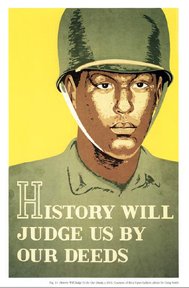
WE WON!
The IFP Cinema Lounge Bill Keyes MC announced, "And the jury awarded special recognition to I WILL COME BACK..." and a big image of Amahl Grant popped onto the screen and the clip, "My grandfather wore a suit everyday of his life. Cold, Heat... it didn't matter, it wasn't a matter of showing out for other people. It was a matter of dignity and Italy had a lot to do with that..."
That was pretty cool to see and hear Amahl talking on that big screen and the crowd applauding our bio-doc film about Buffalo Soldier Samuel H. Grant for the Minnesota Historical Societies' Greatest Generation Film Festival.
Special Jury Prize. I am always curious about why people are awarded Special Jury Prizes, for instance, at Cannes or Sundance. Of course, for us it means we didn't get a share of the big pot of money being put out for prizes. But we did get parting gifts!
Even better, I think, was our reception in the screening rooms. I ran between the two theaters and listened to audience reactions. The audiences cheered at the end of the film and not just in the screening room loaded with Grant family. In fact, the Grant family theater was more subdued than the larger main screening area at the Minnesota History Center. Many from the audience gave us and the Grants warm and appreciative feedback and said they were moved by the story and Samuel Grants courage. not only at war but on the homefront in starting the civil rights movement.
And then the post-mortem sets in, why a "Special Jury Prize" and not the big tamale? Withstanding I had no opportunity for a speech, probably the real reason we didn't get a main category prize. Let me first just express my gratitude for not winning a cash prize. Cash prizes always produce nothing but problems with vendors, with participants, with lawyers who prey upon filmmakers and with outsiders critical of the project who feel the filmmaker just "did it all for the cash." Everybody wants a piece of prize money. It's like winning the lottery and discovering instantly you have hundreds of long lost relatives. There is never enough prize money to recoup expenses.
Let's be honest, screenwriters and filmmakers are two classes of sufferers who will never be made whole by any amount of cash. We don't make films for cash reward. You'd be crazy to think that was our motivation. We do nothing but lose money on films because we believe in them. Besides, jury awards are like homecoming queen contests and cash prizes should never be counted upon.
One thing about the contest this year was how the winning films reflect upon our image of ourselves as Minnesotans. We have myths that must be upheld and this set of films fully embraced the Midwest Minnesotan image of subdued optimism and joy in the face of unbridled hardship.
Our special jury prize film, I WILL COME BACK has the same theme, an honest man who fought for his country even though it never wanted to give him full rights as a citizen and even tried to burn him at the stake but, other-than-than, there is very little variation from the sentimental ghee-whiz sympathy profiles and heroic virtues the Minnesota Historical Society sought to promote.
The suffering Scandinavian is an archetype juries pick because they feel public pressure to uphold Minnesota myths. Or maybe that's the only subject filmmakers felt they should pursue because the MNHS wanted them in the collection.
Over the years you will find an ongoing thread of story that continually gets retold about Minnesota people, that we cannot stop working as our Protestant work ethic will not allow it; we will suffer even Gods and natures vengeance valiantly and without too much complaint; and we never take ourselves too seriously even when we sometimes should. We love this story about ourselves. We want to hear it over and over, whether it be from Garrison Keillor or the Coen Brothers -- it is the archetypal Minnesotan story.
The great thing, I've discovered, is the suffering Scandinavian archetype is not the only story in Minnesota. And hopefully, with future Minnesota Historical Society projects we can get beyond simple stereotypes and explore the rich heritage of Minnesota from the Eastern European immigrants on the Iron Range to the German's of New Ulm, from the farmer to the shopkeeper to the Jewish deli owner to the Italians who lived on the flats along St. Paul's riverfront.
Our states culture is made of different perspectives and prisms through which it can be viewed and should be seen. There are stories of medical discovers, engineering marvels, heroic deeds and achievements, cartoonists, innovators, politicians, artistic achievements and hardworking migrant field workers. And, you'd probably find just as many stories about flappers, strippers and showgirls, nightclub entertainers, snake oil salesmen and gangsters, Holy rollers, boxers and poolsharks than in Brooklyn, New Orleans or Chicago.
This isn't to take any credit away from the winners. I loved Maxine Davis' THE GOOD DOCTOR that won for "best intergenerational film" and "56" by Deacon Warner about a Gopher football hero (also a Special Jury Prize winner) and THE SATISFIED LIFE and unflinching monologue by Ted Wryk by Freya Schirmacher took the top prize for "best film." MY GRANDMA LUCY was a heartfelt film narrated by Ali Drube about her grandmother who suffered from tuberculosis produced with her father Tom that won for "best collaboration" (between father and daughter).
MAKING THE BEST OF HARD TIMES by Roger Bindl won the prize for "best film about children growing up in the depression" who never "felt poor because nobody told them" and that intercut oral history interviews at a cafe in St. Paul. And A SACRED HEART by Norah Shapiro about the poetry of Phebe Hanson that arrived in her journals out of death and loss during an era with plenty of it. All were great stories and deserving winners. And we got to ride up to the premiere in a Rolls Royce limo and walk down the red carpet. It is so much better than cash, really!
Congratulations. Hopefully these film will inspire much more citizen scholarship and documentary making in years to come.
For a list of all 32 films go to:
http://www.mnhs.org
On the way home Patricia asked me why we didn't win the top film prize and money. I told her juries all have their dynamic and perhaps they couldn't fit us neatly into one of the categories. And her response was, "Well, I guess we can take confort that we are true artists, since we won a prize but still remain poor and misunderstood."
We both laughed outloud at her comment.
Friday, October 06, 2006
STRIPPER TO SCREENWRITER...
...or how to get the recognition you want in Hollywood.
Our ever so charming yet naughty Minnesota girl Brook Busey-Hunt, aka Diablo Cody, cred has been lingering in a Hollywood purgatory since her lusty splash to fame on David Letterman this spring. By her own admit, Diablo's instant fame turned quickly into fledgling career and this is the stuff on which Hollywood is made.
Originally, Cody's red-hot script JUNO was shopped around by Mason Novick of the firm Benderspink, who has gained the reputation as the "horny manager" seeking sexy-girl blogger for career in pictures, who discovered Diablo in the Pussy Ranch, took his cut and signed her book "Candy Girl" to a six-figure publishing contract. As if there are not enough horny boys in LA LA land and lusty girls down in the valley! Novick was exposed to Diablo's writing while reading her raunchy blog on the internet. With profits, Brook bought a house in Minneapolis with hubby Jonny as apparently a book deal and a few thousand for a WB "three-picture deal" can no longer finance a house in LA.
According to columnist Jay Fernandez who writes Scriptland for the LA Times Diablo Cody is the kind of success story Hollywood loves. And he continues, "Novick has proven, is that surfing porn at work can no longer unilaterally be written off as unproductive."
LEMONY-SNICKET'S director Brad Silberling was originally slated to direct JUNO but has since been replaced by soup du jour THANK YOU FOR NOT SMOKING writer-director Jason Reitman and GHOST WORLD'S Russ Smith and Lianne Halfon producing for Mandate Pictures. JUNO has long been referred to as the female version of NAPOLEON DYNAMITE, not a flattering comparison in my book, however Reitman is reportedly working with Cody to "flesh-out" the adult characters. [Exactly what ND never got IMHO]
In order to fulfilled her promise to WB, Cody has written the feature script TIME AND A HALF, a dark comedy about a recent college grad swimming into a "mid-20s life crisis" and is finishing scripts for TV pilots she owes Sony and Dreamworks. As Fernandez describes her ascending career, Diablo's "work meetings no longer require a sheet of protective glass." Cody wants to write a horror movie and is tagged as a big fan of THE DESCENT.
Just this week, the Hollywood Reporter announced casting decisions have been made for JUNO. Cody reacted on her blog, "Ellen Page and Michael Cera are both so good. They're gooder than good. They're goodical. They're a Mark Goodson production. I could not be happier."
So the word on the street is that with an entirely new team for JUNO it could begin shooting in January 2007. Will they consider coming to shoot in Hopkins Minnesota again?
Our ever so charming yet naughty Minnesota girl Brook Busey-Hunt, aka Diablo Cody, cred has been lingering in a Hollywood purgatory since her lusty splash to fame on David Letterman this spring. By her own admit, Diablo's instant fame turned quickly into fledgling career and this is the stuff on which Hollywood is made.
Originally, Cody's red-hot script JUNO was shopped around by Mason Novick of the firm Benderspink, who has gained the reputation as the "horny manager" seeking sexy-girl blogger for career in pictures, who discovered Diablo in the Pussy Ranch, took his cut and signed her book "Candy Girl" to a six-figure publishing contract. As if there are not enough horny boys in LA LA land and lusty girls down in the valley! Novick was exposed to Diablo's writing while reading her raunchy blog on the internet. With profits, Brook bought a house in Minneapolis with hubby Jonny as apparently a book deal and a few thousand for a WB "three-picture deal" can no longer finance a house in LA.
According to columnist Jay Fernandez who writes Scriptland for the LA Times Diablo Cody is the kind of success story Hollywood loves. And he continues, "Novick has proven, is that surfing porn at work can no longer unilaterally be written off as unproductive."
LEMONY-SNICKET'S director Brad Silberling was originally slated to direct JUNO but has since been replaced by soup du jour THANK YOU FOR NOT SMOKING writer-director Jason Reitman and GHOST WORLD'S Russ Smith and Lianne Halfon producing for Mandate Pictures. JUNO has long been referred to as the female version of NAPOLEON DYNAMITE, not a flattering comparison in my book, however Reitman is reportedly working with Cody to "flesh-out" the adult characters. [Exactly what ND never got IMHO]
In order to fulfilled her promise to WB, Cody has written the feature script TIME AND A HALF, a dark comedy about a recent college grad swimming into a "mid-20s life crisis" and is finishing scripts for TV pilots she owes Sony and Dreamworks. As Fernandez describes her ascending career, Diablo's "work meetings no longer require a sheet of protective glass." Cody wants to write a horror movie and is tagged as a big fan of THE DESCENT.
Just this week, the Hollywood Reporter announced casting decisions have been made for JUNO. Cody reacted on her blog, "Ellen Page and Michael Cera are both so good. They're gooder than good. They're goodical. They're a Mark Goodson production. I could not be happier."
So the word on the street is that with an entirely new team for JUNO it could begin shooting in January 2007. Will they consider coming to shoot in Hopkins Minnesota again?
ON LOCATION WITH CHASING WINDMILLS
Chasing Windmills is one of the most exciting adventures in dramatic filmmaking to come out of the Twin Cities. Whether you are drawn to the genre of urbane Quixotic drama with a Latin flare or not, you have to admire the shear tenacity of storytelling and the bravado of posting a dramatic story everyday to the internet.
In the couple's first season, during the fall of 2005, Juan Antonio del Rosario and Cristina Cordova centered the short episodic stories primary around themselves and a fictious floundering relationship between a Minneapolis couple with family ties to Puetro Rico. Almost all their scenes were shot in their downtown Minneapolis apartment or nearby skyways and coffeeshops. Dunn Bros. at the Freighthouse is featured prominently in a couple of episodes as well as Runyons Bar. At season end, the couple take a trip to Puetro Rico to visit family and announce their expectations for family expansion.
Then, how quickly the story turns...
In the second season that began appearing on September 25th, the couple have expanded their pallet of locations, story options and characters. They have drawn their characters out of their fan base and through their web presence called together unusual, almost comic book, personae from the world of the web. You don't see these characters on TV because they are post-television digital age citizens. The second season episodes take us in many different directions, following the new characters and into new prominent Minnesota locales.
 While the style of their productions appears, at times, to be hap-hazard and loose - a part of its charm - the stories are actually highly crafted and storyboarded. Juan and Cristina take turns handling the camera while the other performs in the scene.
My wife Patricia and I went on location after Juan and Cristina asked Patricia via email if she'd appear in this seasons episodes. The first episode Patricia appears in is titled LURKING. The main character Q and his new roomate Sam Carr enter a Lake street video store, cruising for single women to pick up. Once inside Sam gives his psycho-sexual analysis of women's film taste based on their availability status and suitability for mating. Sam finally concludes the foreign film section presents the best opportunities for a healthy coupling with a partner. And, as is often the case, that's where Q and Sam find Patricia browsing the shelves.
http://www.chasingmills.com
You can view individual episodes of Chasing Windmills on their main page but also see back episodes and read viewer comments on each on their videoblog:
http://chasingmills.blogspot.com
You can also subscribe to Chasing Windmills in iTunes and set them up to be loaded onto your Video iPod. These new distribution mechanisms and the world-wide audience Chasing Windmills has attracted put Juan Antonio and Cristina on the cutting edge of dramatic storeytelling for a new medium. Television had its golden era with the serialized sitcom; printing mastered its storytelling format with the novel; radio found its perfect form with the radio hour variety show; and now the internet with its fast, immediate and very portable content will find its idiom and golden mean.
Sunday, October 01, 2006
INTO THE WILD WITH BILL POHLAD
I ran into Producer Bill Pohlad and his wife at SW Minneapolis' YUM! restaurant on Saturday evening, where he was taking a break from his hectic travel schedule to grab dinner at this homey bistro owned by brother Bob and sister-in-law Michelle. Bill ate fruit salad and lemon chicken as their infant son slept in the stroller between them. We had a few moments to chat about his film productions.
FUR is going to open at the Rome Film Festival, Bill said, in a couple of weeks, however, he will not be in Rome for the festival due to the production schedule for INTO THE WILD, taking him to Portland while the Shawn Penn film shoots on location in Beaverton, Oregon in October.
FUR stars Nicole Kidman as Diane Arbus and has evolved into "an imaginary portrait" of Arbus under Steven Shainberg's direction and script by Erin Cressida Wilson, the writing team who brought the adaption SECRETARY to the screen. A wind of controversy swirls around FUR as the writer and director focused this portrait somewhat narrowly on an Arbus' obsession with forbidden sexual behavior, also a central theme in SECRETARY, as opposed to Arbus' complex career as a New York artist and photographic genius.
Pohlad's current production, INTO THE WILD is an adventure drama based on the bestselling story by Jon Krakauer about a top student and athlete from Emory University, Christopher McCandless (being played by Emile Hirsch) who abandons conventional life for the Alaskan wilderness. The script adaptation was written by Sean Penn who is also directing the film with Pohlad as Producer. The cast includes William Hurt as McCandless' demanding aerospace engineering father and Catherine Keener as well as Vince Vaughn as Wayne Westerberg.
In the non-fiction book by Krakauer, McCandless in a Tolstoyan fit renounced all his possessions, hitch-hikes to Alaska to live in the wilderness and return to nature. Keener plays Jan Burns who picked up McCandless and treated him as a surrogate son while Vaughn plays a tow-truck driver he meets while on the road. Shockingly, McCandless died of starvation four months later in a remote campsite inside an abandoned bus.
While Penn has been director of other special projects and several music documentaries, his last film for Warner Bros was THE PLEDGE (2001) that carried an estimated budget of $45M and ended grossing $20 in U.S. box office receipts. Penn's effort on THE PLEDGE was noticed with nominations for Cannes' Golden Palm and Berlin's Golden Bear but failed to achieve significant notoriety upon release.
Penn has recently been in the news for his interest expressed making the politically hot-button film adaptation of Richard Clark's Washington insiders memoir AGAINST ALL ENEMIES also with Vince Vaughn.
FUR is going to open at the Rome Film Festival, Bill said, in a couple of weeks, however, he will not be in Rome for the festival due to the production schedule for INTO THE WILD, taking him to Portland while the Shawn Penn film shoots on location in Beaverton, Oregon in October.
FUR stars Nicole Kidman as Diane Arbus and has evolved into "an imaginary portrait" of Arbus under Steven Shainberg's direction and script by Erin Cressida Wilson, the writing team who brought the adaption SECRETARY to the screen. A wind of controversy swirls around FUR as the writer and director focused this portrait somewhat narrowly on an Arbus' obsession with forbidden sexual behavior, also a central theme in SECRETARY, as opposed to Arbus' complex career as a New York artist and photographic genius.
Pohlad's current production, INTO THE WILD is an adventure drama based on the bestselling story by Jon Krakauer about a top student and athlete from Emory University, Christopher McCandless (being played by Emile Hirsch) who abandons conventional life for the Alaskan wilderness. The script adaptation was written by Sean Penn who is also directing the film with Pohlad as Producer. The cast includes William Hurt as McCandless' demanding aerospace engineering father and Catherine Keener as well as Vince Vaughn as Wayne Westerberg.
In the non-fiction book by Krakauer, McCandless in a Tolstoyan fit renounced all his possessions, hitch-hikes to Alaska to live in the wilderness and return to nature. Keener plays Jan Burns who picked up McCandless and treated him as a surrogate son while Vaughn plays a tow-truck driver he meets while on the road. Shockingly, McCandless died of starvation four months later in a remote campsite inside an abandoned bus.
While Penn has been director of other special projects and several music documentaries, his last film for Warner Bros was THE PLEDGE (2001) that carried an estimated budget of $45M and ended grossing $20 in U.S. box office receipts. Penn's effort on THE PLEDGE was noticed with nominations for Cannes' Golden Palm and Berlin's Golden Bear but failed to achieve significant notoriety upon release.
Penn has recently been in the news for his interest expressed making the politically hot-button film adaptation of Richard Clark's Washington insiders memoir AGAINST ALL ENEMIES also with Vince Vaughn.
Thursday, September 28, 2006
BRENT BOYD'S AURORA BOREALIS

In the first date scene between Duncan (Joshua Jackson) and Kate (Juliette Lewis), meant to resemble Matt's Bar in South Minneapolis, Kate exclaims that Minneapolis is a great city to live in. Duncan asks if she means his neighborhood and she answers, "Well, this isn't as nice as St. Paul" to which Duncan answers, "St. What?" and she resserts "St. Paul!" Duncan, whose lived in Minneapolis all his life says, "Never heard of it."
At the Lagoon Theater preview screening in Minneapolis, this line gets a big laugh but one has to wonder if it plays in New York or North Carloina and if people in those cities even know that the boundry between the two cities is blurred, perhaps even, indisquishable except for the winding Mississippi. I asked Brent Boyd this question. He says, yes, the insider lines and distinctive Minnesota humor plays all over the country. In fact, Boyd claims the more particular and specific you get writing your screenplay and defining characters, the more unviersal the story becomes.
AURORA BOREALIS opens nationwide this week with Donald Sutherland, Lewis, Jackson, and Louise Fletcher (you might remember Fletcher as nurse Ratchett in ONE FLEW OVER THE CUCKOO'S NEST) and a distinctively regional Minnesota accent. While the film was shot in Toronto, the exteriors are dresssed up to look like Minneapolis with a few b-roll juxtapostions to fool you. But make no mistake, the film is pure Minnesota in character and perspective from the opening song Bob Dylan's "Everything is Broken" to the oft referenced Replacements with a cameo appearance from Paul Westerberg.
Sutherland's character Ronald Shorter emerges directly out of the Minnesota's Northwoods. Almost lumberjackian in displeasure and Finish in temperment, the former hardware store owner suffers from Parkinson's and the "A-bomb." Through the trials of losing control over his body and environment becomes uneasily settled in South Minneapolis under the caring eye of his wife (played by Fletcher) and his unemployed and unambitious grandson Duncan as well as a health care assistant played by Lewis.
Sutherland grabs onto the old feisty Scandinavian rugged-individualism attitude with success. During the filming of AURORA BOREALIS, Boyd was kept on the set for rewrites and often Sutherland badgered and podded the young writer as a way of reaching a better understanding of Ronald Shorter. Depending on the field of possible supporting actor roles this year, Sutherland might grab a nomination for best supporting actor in this film, however, the film's release has no backing from a studio and is struggling under the inexperience of its specialized distributor Regent who might not be up for the challenge of handling the larger audience potential of a Sutherland film. And certainly, in the horse-race for Oscar nominations an experienced distribution company makes an enormous difference in placing their horse in the gates.
Never-the-less, the appreciation of the films humor and specificity comes from the contrast a Minnesota character offers to the outside viewer. For viewers like my wife (a Brazilian) and her friends from outside the country, they immediately recongize the "Minnesota-guy" syndrome that Duncan suffers under. And perhaps also the release an outsider like Kate presents to their focused world under his fur lined parka hood.
Definitely a film for the autumn holiday season.
Tuesday, April 11, 2006
GUILTY SELF-INDULGENCES ON 4/11
Being today is my birthday today, April 11th, I thought I might go to the subject of self-indulgent cinema tastes -- my secret uncensored interests and joys.
On the political front, I my curiosity sways toward films from countries that give me a chance to probe and investigate political cultures other than my own. With the Italian election just completed and Silvio Berlusconi refusing to concede power, I am reminded of the first political films that appealed to me in cinema were by the great Italian auteurs: Federico Fellini, Roberto Rossellini, Michelangelo Antonioni, Pier Paulo Passolini and Bernardo Bertolucci.
OEDIPUS REX, 8 1/2, THE CONFORMIST, BLOWUP, VIVA L'ITALIA! were Italian realist and political films, I used to program in the cinema club lounge during my university days. While college students today prefer ANIMAL HOUSE and such frat-boy humor as ANCHORMAN, radicalized students in my day flocked in numbers to Eastern European, Russian, and Italian movies condemning fascism and unfettered abuse of government power.
More recently, however, I have been enjoying political film from Brazil. And, while you may have recently seen THE CONSTANT GARDENER, a film enjoyed because my fondness for political firebrands like Tessa (played by Rachel Weisz) I go back to Fernando Meirelles' first film (who directed CONSTANT GARDENER). CITY OF GOD is absolutely amazing and probably the best film of 2002.
I also enjoyed Seigio Bianchi's CRONICAMENTE INVIAVEL (2002) or the English translation would be CHRONICALLY INFEASIBLE which is both satirically biting and funny. Not since Luis Bunuel's DISCRETE CHARM OF THE BOURGEOISIE (which this film resembles) has a film been more incisive and powerful.
Another interesting Brazilian political film would be ONIBUS 174 (Bus 174) a gripping documentary by Jose Padilha also from 2002. Padilha chronicals the actual events in 2000 when a street bandit took control of a bus after armed robbery gone bad turns a hostage situation and unfolds into a surreal drama involving the media, police incompetence and desparate victims in a face-to-face conundrum.
Now, away from the Brazilian front, I also very much enjoyed a Norwegian film called UTOPIA, which I probably shouldn't even mention since it has never been distributed in the U.S. and if difficult to obtain. I had to write to the Producer Ørjan Karlsen and request it under its native language title "Folk flest bor i Kina" or translated MOST PEOPLE LIVE IN CHINA Ørjan didn't at first understand when I asked him for UTOPIA which film I was talking about but then explained the title was changed provisionally to UTOPIA for a potential American distributor who never contracted the movie.
Anyway, UTOPIA or MOST PEOPLE LIVE IN CHINA is a very funny and inventive film constructed in 9 parts (one parable for each political party in Norway), each part describing with humor and self-humility (Norwegians are great at self-humor) the aspirations and lifestyles of its people. The films sections were each written by a different screenwriter within a collective called Oslo Screenwriters Workshop and directed by different directors. Each political allegory was edited and shopped to festivals as film shorts. A few won international prizes. Writer/Director Thomas Robsahm than wrote an interstitial movie to tie all the short films together. And its brilliant.
I am a big champion of UTOPIA or FOLK FLEST BOR I KINA and am sorely disappointed that this inventive drama never received American distribution. I found the film listed on the Norwegian Film Insitute web site (http://www.nfi.no/english) and then contacted Motly's, its distributor. You also have to obtain or own a multi-region capable DVD player because the DVD is not encoded for the U.S. but let's hope the future will break down all these arbitrary and artificial barriers to stories and cultural understanding. Technology and copy protection schemes, at the moment, only seem to throw more barriers and fences up.
Monday, April 03, 2006
MSPIFF: AL FRANKEN'S GOD SPOKE
AL FRANKEN: GOD SPOKE will open the Minneapolis/St. Paul International Film festival on April 20. The normally intensive international festival will take on a decidedly local flavor this year due to radical cutbacks in administration and lack of scheduling from international festivals.
Chris Hegedus and D. A. Pennebaker, the makers of THE WAR ROOM and START-UP.COM turn their cinema verite cameras on the burgeoning political career of Minnesota's own comedian turned bull-dog Al Franken. Shot over the course of two years, the film follows the former SNL writer/producer turned hard-hitting commentarist from his highly publicized (and well-timed) feud with Bill O’Reilly over Franken’s best selling book, “Lies and the Lying Liars Who Tell Them” to his tireless campaign against George Bush in the 2004 Presidential election.
“I take what they say and use it against them. What I do is jujitsu.” Al Franken describes his style of counter-punch politics.
From Franken's USO tour in Iraq, to the studios of liberal radio network Air America and on the campaign trail, filmmakers Nick Doob and Chris Hegedus were granted entre to one of the most effective political satirists of our time. Minnesotan's will recognize documentary footage shot in Minnesota, and Franken will make an appearance on the opening night of the MSPIFF.
Franken fearlessly confronts pundits and politicians, blurring boundaries between political satire and impassioned citizenry. Featuring a host of beltway big mouths including Ann Coulter, Michael Moore, Al Gore, John Kerry, Robert Kennedy Jr., Sean Hannity, William Safire, Karen Hughes and Henry Kissinger, the film is an hilarious look behind the front lines of the media wars during the most contentious election in recent history.
But ultimately, the film is a personal drama of transformation, as Al Franken leaves comedy behind and moves from his seat in the sidelines to become a contender inside the political ring. And it maybe a inside look at Franken's future aspirations that may include a run at one of his most sought after foes -- Senator Norm Coleman -- who first slighted Franken's friend Paul Wellstone and then went onto replace the Senator after the tragic air crash that killed him, Sheila Wellstone and their daughter Marsha.
In years past MSFIPP has had a strong relationship with the Norwegian consulate and northern European countries and audiences can expect to continue to see international films with a Scandinavian flavor. The festival is scheduled to close with the Minnesota-made Ali Selim's SWEET LAND based on Will Weaver's novel about a Norwegian mail order bride who took root in Minnesota's northwestern wheat fields.
Saturday, April 01, 2006
WALKER AND VIERTEL LEAD PRODUCERS CONFERENCE
Minnesota's most active producer Christine Kunewa Walker and wirter/producer Joel Viertel headline the day-long annual IFP Producers Conference constructed around the theme of shooting locations. Location manager Clint Allen for SWEET LAND, Ali Selim's Minnesota indie feature scheduled to close the Minneapolis/St. Paul International Film Festival on April 30th will also lead the conference.
The 2006 IFP Independent Producers Conference will focus on the many elements of shooting on location, whether your script is set in the Little Belt Mountains of Montana or Little Italy. Via discussions and case studies of the guest producers' films, you'll learn everything from scouting, legal fees, permits and insurance to prepping a production for a location and much more.
CONVENTIONEERS, co-penned by Viertel and director Mora Stephens, tells of a young Republican man comes to New York for the first time to be a delegate in the Republican National Convention and falls into an unlikely affair with a girl he knew in college - a Democrat who returns to the city to protest the convention. Conventioneers is an ironic Romeo & Juliet story set against the real 2004 RNC that explores the consequences of the divide in American politics. CONVENTIONEERS was the winner of the 2006 Independent Spirit's John Cassavetes Award for Best Feature Made for Under $500K.
Ali Selim’s dramatic feature SWEET LAND based on Will Weavers novel tells the story of Inge as she buries her husband Olaf on their Minnesota farm in 1968, we relive her life story as she tells her grown grandson about how she arrived from Norway in 1920 as Olaf's postal bride and of the epic obstacles they overcame in order to marry. Selim shot the majestic looking landscapes in Central Minnesota with considerable location support from Montevideo town and citizen stand-ins and extras.
Also on hand will be conference panelists James Bigham (SWEET LAND), Mike S. Ryan (JUNEBUG) Lucinda Winter, Executive Director of the Minnesota Film & TV Board, and SWEET LAND Production Manager Clint Allen. Location shooting for locally produced shorts will be discussed by local filmmakers William Kruse and Kris Barberg.
CONVENTIONEERS will be screened at the Minneapolis/St. Paul International Film Festival (producer present) on Friday evening, April 21 (time/location TBA) and will be a featured case study at the conference. Watch for updates on confirmed guests and other details!
IFP Minnesota's 7th Annual Independent Producers Conference
THEME: Location is Everything!
DATE: Saturday, April 22, 2006
TIME: 9:00 am - 4:45 pm
GUESTS: Joel Viertel (Writer/Producer of drama CONVENTIONEERS)
Christine Walker (Producer AMERICAN SPLENDOR, FACTOTUM)
Clint Allen (Production Manager SWEETLAND)
PRICE: $50 IFP Members; $40 Students & Seniors; $75 General Public
LUNCH: $10 (optional - Middle Eastern buffet provided by Holy Land)
PLACE: Minneapolis Community & Technical College, Wheelock Whitney Hall, Rm. L3000
REGISTER: Call 651.644.1912
The 2006 IFP Independent Producers Conference will focus on the many elements of shooting on location, whether your script is set in the Little Belt Mountains of Montana or Little Italy. Via discussions and case studies of the guest producers' films, you'll learn everything from scouting, legal fees, permits and insurance to prepping a production for a location and much more.
CONVENTIONEERS, co-penned by Viertel and director Mora Stephens, tells of a young Republican man comes to New York for the first time to be a delegate in the Republican National Convention and falls into an unlikely affair with a girl he knew in college - a Democrat who returns to the city to protest the convention. Conventioneers is an ironic Romeo & Juliet story set against the real 2004 RNC that explores the consequences of the divide in American politics. CONVENTIONEERS was the winner of the 2006 Independent Spirit's John Cassavetes Award for Best Feature Made for Under $500K.
Ali Selim’s dramatic feature SWEET LAND based on Will Weavers novel tells the story of Inge as she buries her husband Olaf on their Minnesota farm in 1968, we relive her life story as she tells her grown grandson about how she arrived from Norway in 1920 as Olaf's postal bride and of the epic obstacles they overcame in order to marry. Selim shot the majestic looking landscapes in Central Minnesota with considerable location support from Montevideo town and citizen stand-ins and extras.
Also on hand will be conference panelists James Bigham (SWEET LAND), Mike S. Ryan (JUNEBUG) Lucinda Winter, Executive Director of the Minnesota Film & TV Board, and SWEET LAND Production Manager Clint Allen. Location shooting for locally produced shorts will be discussed by local filmmakers William Kruse and Kris Barberg.
CONVENTIONEERS will be screened at the Minneapolis/St. Paul International Film Festival (producer present) on Friday evening, April 21 (time/location TBA) and will be a featured case study at the conference. Watch for updates on confirmed guests and other details!
IFP Minnesota's 7th Annual Independent Producers Conference
THEME: Location is Everything!
DATE: Saturday, April 22, 2006
TIME: 9:00 am - 4:45 pm
GUESTS: Joel Viertel (Writer/Producer of drama CONVENTIONEERS)
Christine Walker (Producer AMERICAN SPLENDOR, FACTOTUM)
Clint Allen (Production Manager SWEETLAND)
PRICE: $50 IFP Members; $40 Students & Seniors; $75 General Public
LUNCH: $10 (optional - Middle Eastern buffet provided by Holy Land)
PLACE: Minneapolis Community & Technical College, Wheelock Whitney Hall, Rm. L3000
REGISTER: Call 651.644.1912
Monday, March 20, 2006
DIABLO CODY GOES MONDAY
A revision to David Letterman's CBS Late Night schedule puts Minnesotan Diablo Cody on Monday night March 20th after Denzel Washington.
http://www.cbs.com/latenight/lateshow/show_info/
Originally, Cody was to tape on Monday and air as the third guest on Wednesday. Cody will be plugging for her book "Candy Girl," an autobiographical account of the life of a stripper in Minneapolis adult soda pop clubs and will not speak about her script JUNO. In the interview with Letterman, Cody (her real name is Brook Busey-Hunt) reportedly tells Dave "if this writing thing doesn't pan out, I'll go back to the pole." Much to Letterman's delight, Cody describes the work of being a stripper and even "bed dances" an act that simulates sex on a bed according to viewers of the taping session.
Denzel Washington will promote Spike Lee's newest crime mystery thriller INSIDE MAN also starring Clive Owen and Jody Foster. The two-time Oscar winner also currently has a son who is being actively sought in the NFL and a daughter entering Ivy League schools. Washington plays a down-and-out cop who steps into the role of negotiating the release of hostages in a bank robbery gone wrong.
http://www.cbs.com/latenight/lateshow/show_info/
Originally, Cody was to tape on Monday and air as the third guest on Wednesday. Cody will be plugging for her book "Candy Girl," an autobiographical account of the life of a stripper in Minneapolis adult soda pop clubs and will not speak about her script JUNO. In the interview with Letterman, Cody (her real name is Brook Busey-Hunt) reportedly tells Dave "if this writing thing doesn't pan out, I'll go back to the pole." Much to Letterman's delight, Cody describes the work of being a stripper and even "bed dances" an act that simulates sex on a bed according to viewers of the taping session.
Denzel Washington will promote Spike Lee's newest crime mystery thriller INSIDE MAN also starring Clive Owen and Jody Foster. The two-time Oscar winner also currently has a son who is being actively sought in the NFL and a daughter entering Ivy League schools. Washington plays a down-and-out cop who steps into the role of negotiating the release of hostages in a bank robbery gone wrong.
Subscribe to:
Posts (Atom)


